
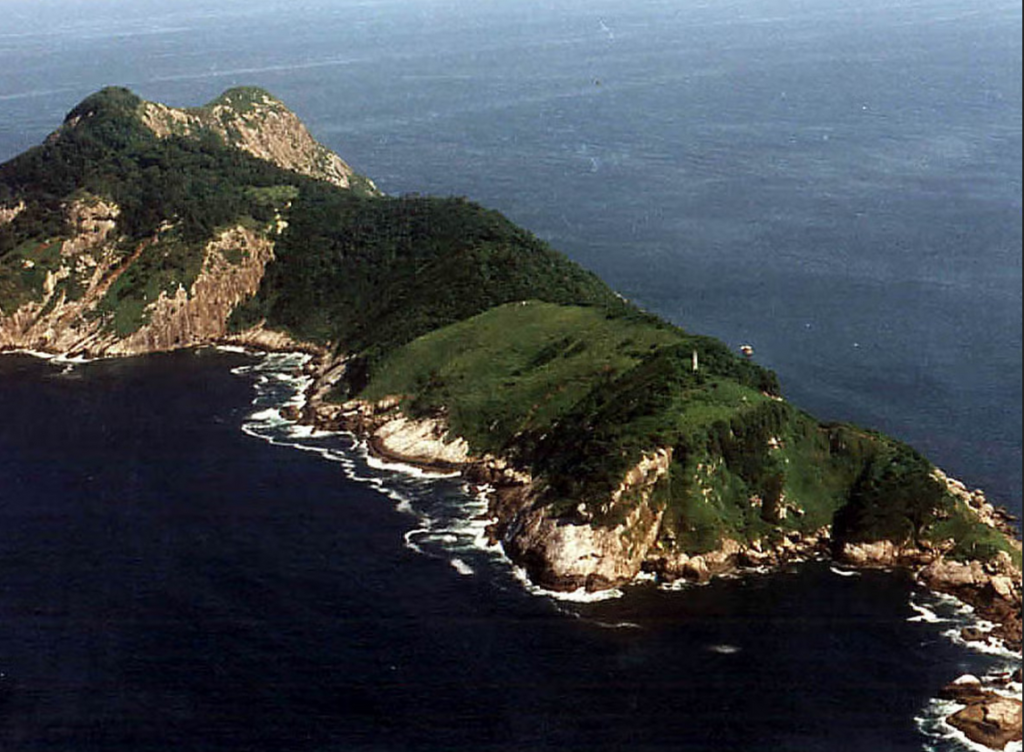
Ilha da Queimada Grande is a lush, emerald-green outcrop off the southeastern coast of Brazil, about 93 miles from the busy city of São Paulo. A sailor passing by would think it was a tropical paradise—a 106-acre sanctuary of thick rainforest and sharp cliffs rising from the Atlantic. People who know its reputation call it Snake Island, which is a much darker name. Many people think this island is the most dangerous place on Earth. It’s not because of active volcanoes or bad weather, but because it is the only place where the Golden Lancehead pit viper lives. This snake is one of the most dangerous reptiles on Earth.
The Evolutionary Isolation of Ilha da Queimada Grande
The story of Snake Island is a great example of how evolution works. Around 11,000 years ago, at the end of the last Ice Age, the sea level rose and cut off this small hill from the Brazilian mainland. This change in the earth’s crust left a group of common jararaca snakes stuck on the island. The snakes had a unique problem to solve in order to stay alive: there were no ground predators to hunt them and no mammals to eat. They had to get used to a new food source: migratory birds that stopped on the island to rest on their long journeys across the ocean.
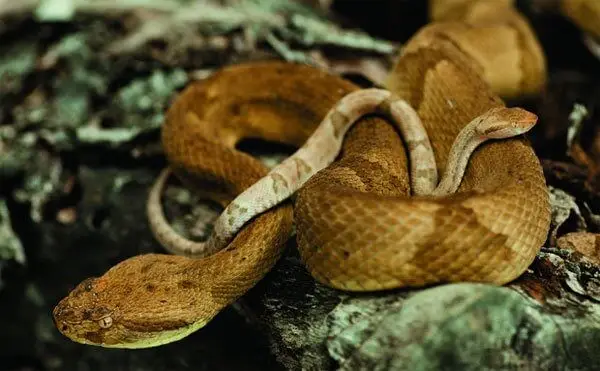
Natural selection changed these snakes over thousands of years into a new species that can’t be found anywhere else on Earth. The Golden Lancehead developed venom that is three to five times stronger than that of its mainland relatives to keep its bird prey from flying away after it bites them. This “super-venom” is meant to work almost right away, paralyzing the bird and melting its flesh to make it easier to digest. Some estimates say that there is one snake for every square meter in some parts of the island today because it is so crowded.
The Golden Lancehead Viper’s Deadly Power
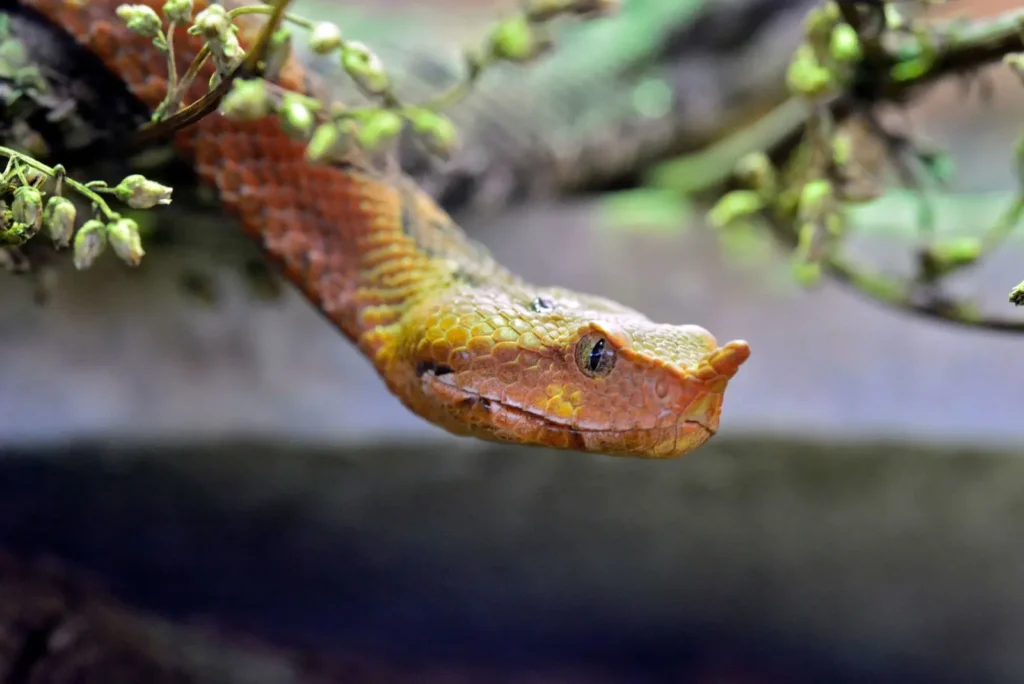
The Golden Lancehead (Bothrops insularis) is a very interesting animal because its scales are a light yellowish-brown color and its head is shaped like a triangle. It looks great, but its bite is a medical nightmare. For a person, the venom can cause a scary range of symptoms, such as kidney failure, intestinal bleeding, and even the death of muscle tissue. In the worst cases, the venom is so strong that it can make the brain bleed.
Because these vipers are so dense, just walking through the woods would be a death sentence. The island doesn’t have any hospitals, fresh water sources, or emergency services. A bite could kill someone in an hour, and because of the terrain, a rescue mission would probably get there too late. The Brazilian government has banned all public access to the island because it is so dangerous.
Tales of the Lighthouse and the Treasure That Was Lost
There are a lot of urban legends and ghost stories about places like Snake Island that people aren’t allowed to visit. One of the scariest stories is about the island’s lighthouse, which was built in 1909. People in the area say that the last lighthouse keeper lived there with his wife and kids. One night, a bunch of snakes crawled through an open window and attacked the family while they slept. They ran into the woods in a last-ditch effort to get to their boat, but vipers hanging from trees reportedly caught up with them. The Brazilian Navy was supposed to make a routine supply drop, but when they got there, they found the lighthouse empty and the family’s bodies all over the island.
Another common myth says that pirates put the snakes on the island on purpose to protect a huge stash of buried treasure. Modern science has shown that this isn’t true; snakes evolved naturally through isolation. However, the legend of “Pirate Gold” still sometimes brings reckless treasure hunters and “biopirates” to the island’s shores, even though they are almost certain to die.
Why People Can’t Go There
The Brazilian Navy takes care of the lighthouse today. It has been fully automated since the 1920s to keep people from dying. Only a small number of elite researchers and herpetologists are allowed to be on Snake Island. They must get strict federal permits from the Chico Mendes Institute for Biodiversity Conservation. Even then, these scientists have to bring a professional doctor with them on every trip, along with enough antivenom to treat the whole team.
The ban protects both people and snakes by keeping them apart. Even though they have a scary reputation, the IUCN Red List says that Golden Lanceheads are critically endangered. Because they only live on this one small island, any disaster there, like a forest fire or a disease outbreak, could kill off the whole species in a flash. Also, wildlife smugglers often put their lives in danger to catch these vipers because one Golden Lancehead can sell for up to $30,000 on the black market to collectors of exotic pets or researchers in the pharmaceutical field.
The Scientific Possibilities of Deadly Venom
The thing that makes Snake Island so dangerous could one day save millions of lives, which is funny. Scientists are very interested in what chemicals make up the venom of the Golden Lancehead. Scientists have found that some of the proteins in the venom could be used to treat high blood pressure, heart disease, and even blood clots. Pharmaceutical companies want to make new medicines that can save lives by studying how the venom affects human blood and tissue.
This changes Snake Island from a “horror movie setting” into an important biological lab. It reminds us that even the scariest parts of nature have a part to play in the ecosystem of the whole world. The island is still off-limits, but it is important for the future of medical science and our understanding of evolution that it stays alive.
Other “Snake Islands” in the World Besides Brazil
The Brazilian Ilha da Queimada Grande is the most well-known, but it isn’t the only place with this name. There is another “Snake Island” (Zmiinyi Island) in the Black Sea that was in the news a lot during the 2022 Russian invasion of Ukraine. But that island is different in terms of geology and biology; it’s a military base instead of a jungle full of snakes.
China’s Shedao Island is home to thousands of pit vipers that hunt migratory birds in a way that is almost exactly like the Golden Lancehead. These islands are like “natural experiments” that show how life changes when it is cut off from the rest of the world. But none of them capture the public’s imagination quite like the original from Brazil, which is a deadly beautiful place where snakes really rule.