
The Roman Colosseum is a lasting symbol of history that looms large over the streets of modern Rome. The Flavian Amphitheatre was the name of this huge stone building when it was built by Emperor Vespasian of the Flavian dynasty as a gift to the Roman people around 70–72 AD. It was a brilliant move in political PR to build it on the site of Nero’s old private lake to show that the city was back in the hands of its citizens. The Roman Colosseum is not just a crumbling relic of the past; it is also a powerful symbol of the Roman Empire’s architectural genius, social hierarchy, and love of grand displays.
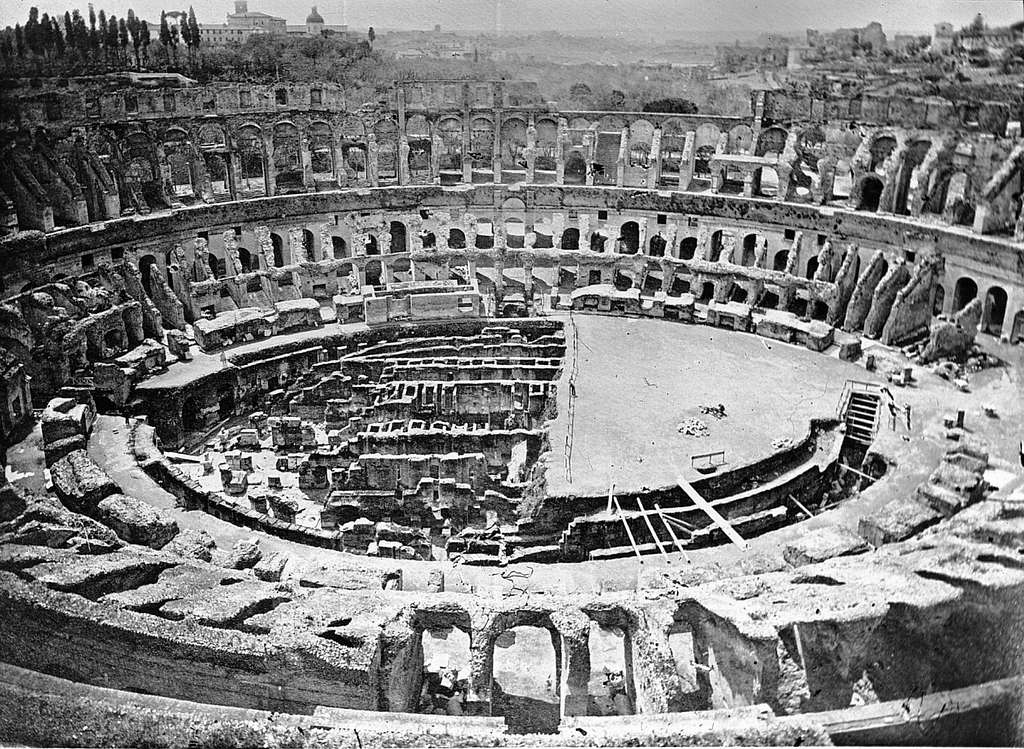
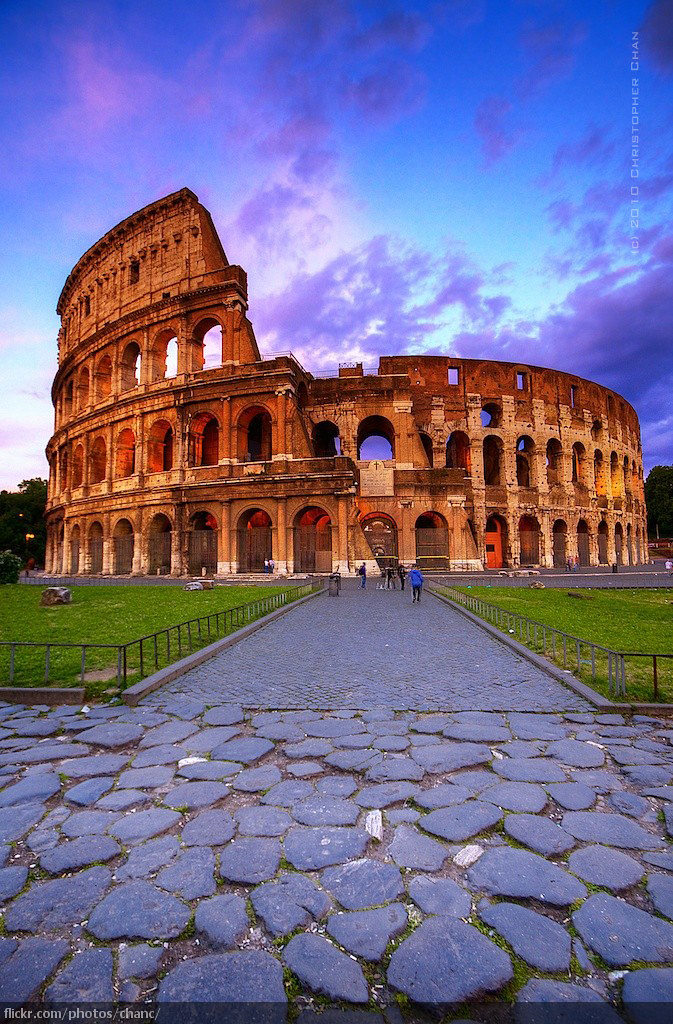
The engineering feat of the Roman Colosseum is clear to see as soon as you get close to it. It was made mostly of travertine limestone, tuff volcanic rock, and brick-faced concrete. At the time, it was the largest amphitheater ever built and could hold between 50,000 and 80,000 people. The outside of the Roman Colosseum had three stories of arches stacked on top of each other. The bottom story had Doric columns, the middle story had Ionic columns, and the top story had Corinthian columns. This design made the walls look light and airy, even though they were made of millions of tons of stone to keep them up.
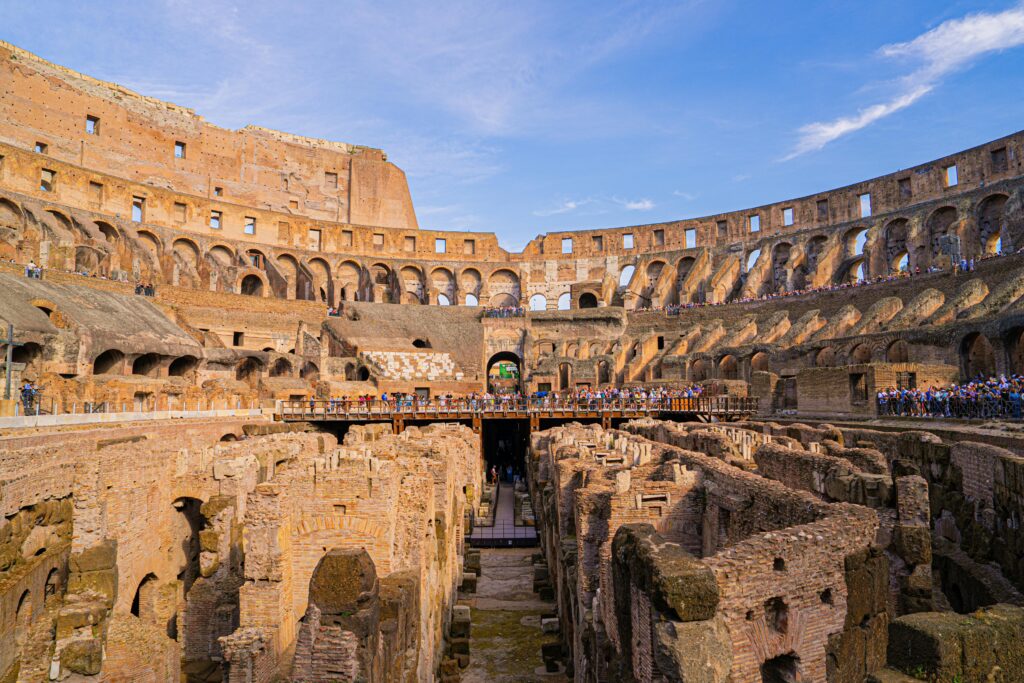
The inside of the Roman Colosseum was very well organized, which showed how strict Roman society was. Seating was strictly assigned based on rank. The emperor and senators sat on the prestigious podium closest to the action, while common people and women sat on the higher, farther tiers. The architects of the Roman Colosseum built a complex system of eighty numbered entrances and vaulted corridors, called vomitoria, to handle the huge crowds. This system worked so well that the whole stadium could be cleared out in minutes. This design principle is still used in sports stadiums all over the world today.
The hypogeum, a network of tunnels and cages under the wooden floor of the arena, was the engine room for the Roman Colosseum. Gladiators trained for battle in this secret place, and exotic animals like lions, tigers, and bears from the farthest corners of the empire were kept in the dark until they were brought out into the light. The Roman Colosseum was so complicated that even the sky was involved. Specialized sailors could use a huge retractable awning called the velarium to protect the audience from the hot Mediterranean sun.
The Roman Colosseum held events to show how powerful Rome was over its enemies and the natural world. Gladiator fights are the most famous of these events, but the arena also held fake sea battles, animal hunts, and public executions. For a Roman citizen, a day at the Roman Colosseum was a sensory overload of blood, dust, and cheers. It was both a form of entertainment and a reminder of the state’s total power. There, the line between life and death was drawn by the turn of a thumb, and the words “Panem et Circenses,” or “Bread and Circuses,” rang the loudest.
The Roman Empire began to fall apart a long time ago, and the Roman Colosseum fell into disrepair after the games stopped in the 6th century. Natural disasters, like terrible earthquakes and lightning strikes, did a lot of damage to the building, which is why the famous partial collapse of the outer south wall happened. In the Middle Ages, the Roman Colosseum was used in ways that the ancients could never have imagined. It was a fortress for noble families, a makeshift quarry for building materials, and even a place of worship. Stone and marble from the skeletons of the amphitheater were used to build many of Rome’s Renaissance palaces and even parts of St. Peter’s Basilica.
In the 18th and 19th centuries, Popes and historians began to take the preservation of the Roman Colosseum seriously because they understood how important it was to culture and religion. It was eventually made a holy place to honor Christian martyrs who were thought to have died within its walls, though there is still some debate among historians about the veracity of these claims. Because of this change in how people saw it, the Roman Colosseum would no longer be seen as a place to get scrap stone, but as a monument that should be protected for future generations to study and admire. Recent restoration projects have worked hard to get rid of the soot from modern pollution on the travertine and make the crumbling interior passages of the site stronger.
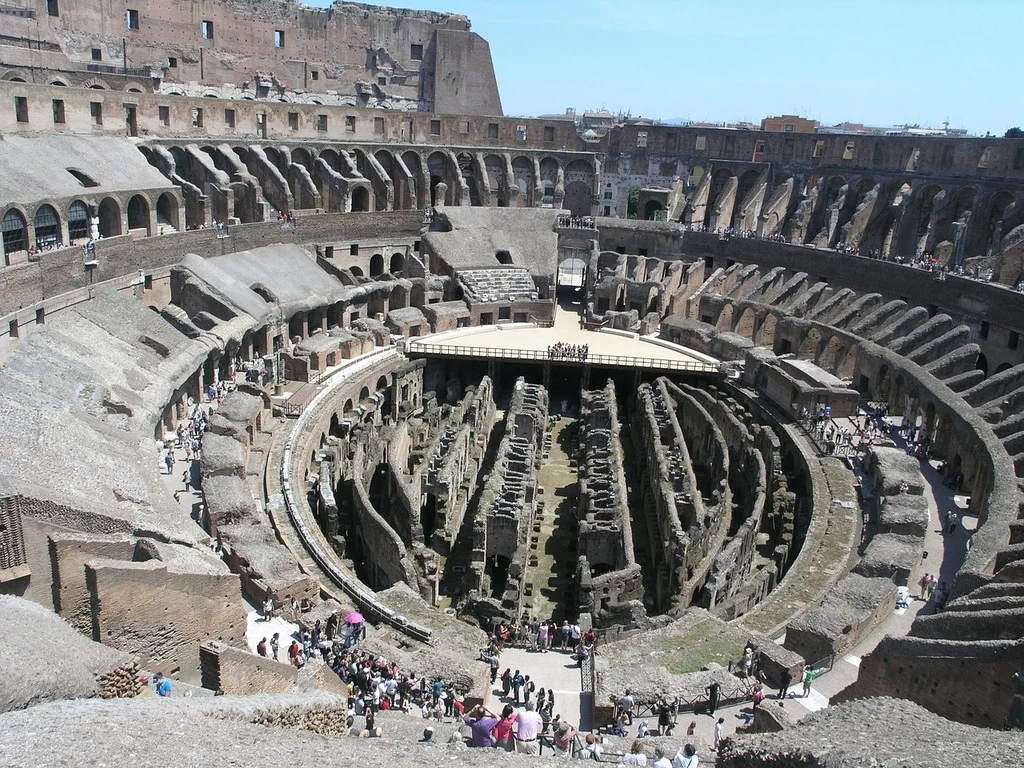
Today, walking through the halls of the Roman Colosseum gives you a hauntingly beautiful look at a civilization that was both cruel and brilliant. You can still see where ancient spectators carved their names into the stones and where heavy machinery used to move across the floor. The Roman Colosseum connects the past and the present. It reminds us of how much people want to share experiences and how powerful monumental architecture can be. It is still the most important part of the Roman Forum area, attracting millions of visitors who want to stand where emperors once stood and feel the weight of two thousand years of history.
The Roman Colosseum is still changing as we look to the future. New high-tech flooring is being put in so that people can once again stand in the middle of the arena. The goal of this project is to recreate the experience of the ancient gladiators while keeping the fragile archaeological layers of the hypogeum below safe. The Roman Colosseum is more than just a place for tourists to visit; it is also a living laboratory for archaeologists and proof that people can make things that last. It is still an unmatched symbol of the Eternal City, whether seen in the golden light of sunset or under the bright lights of modern floodlights.