
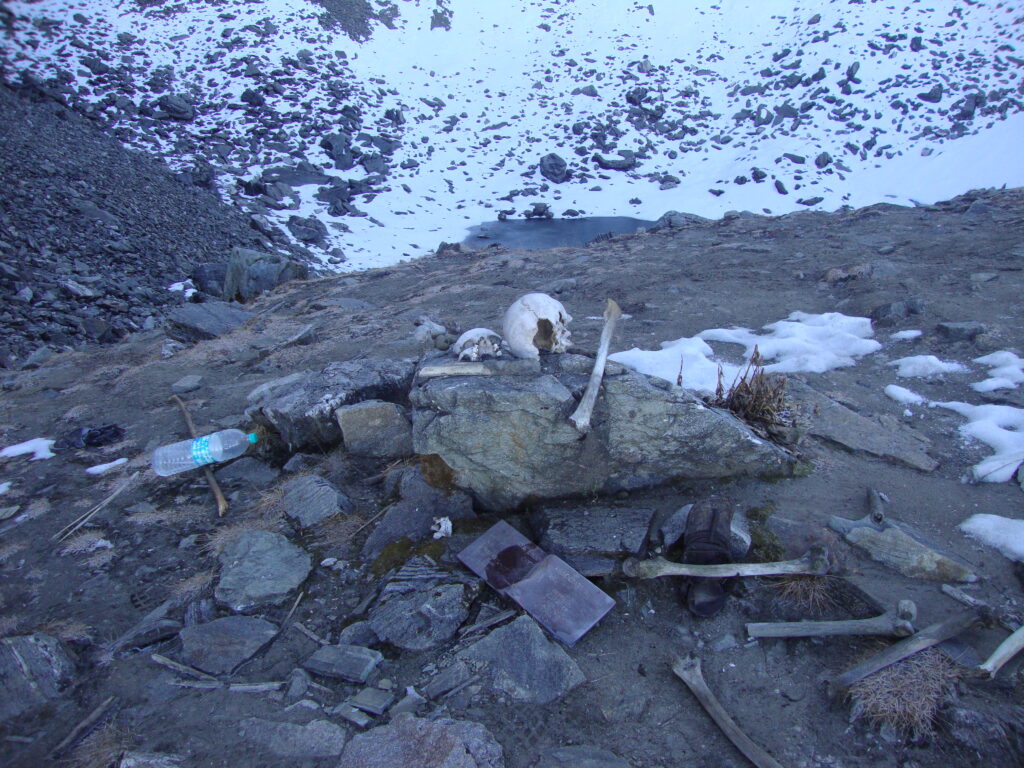
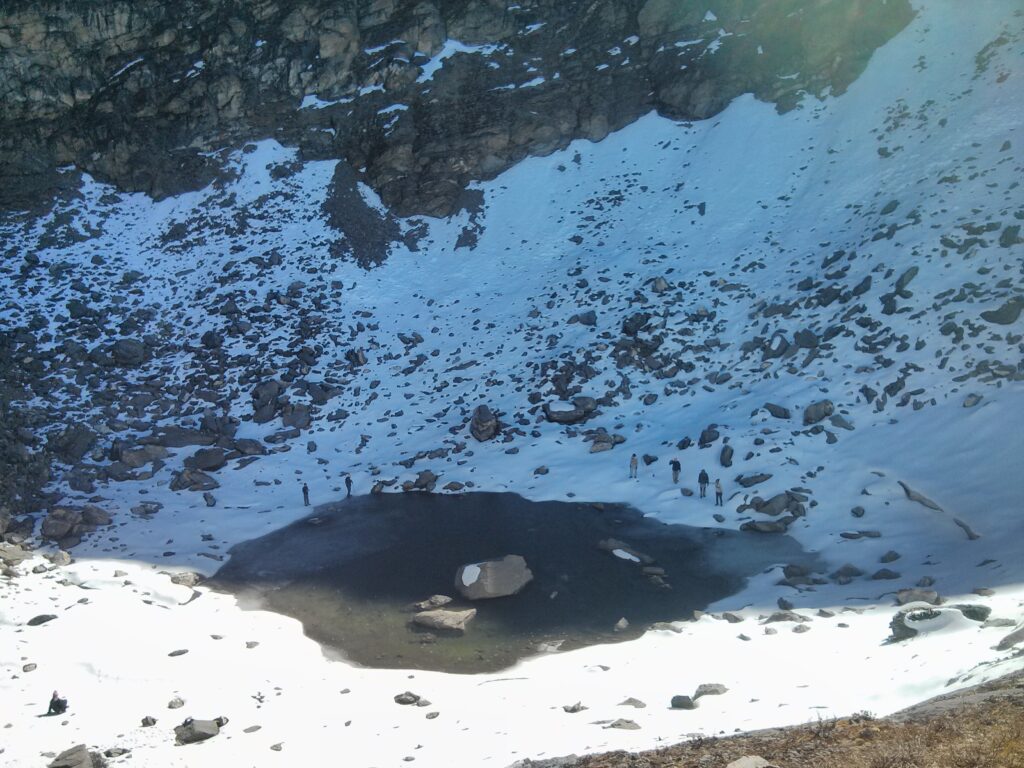
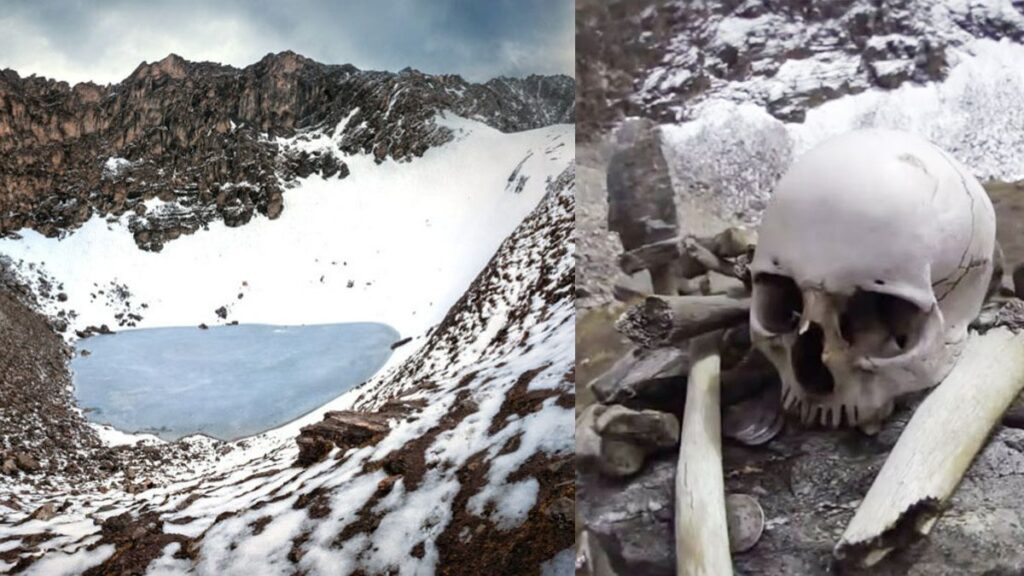
A body of water that doesn’t make sense and haunts the imagination can be found high up in the craggy peaks of the Indian Himalayas, in the Trishul massif of Uttarakhand. People in the area call it Roopkund, but people all over the world call it Skeleton Lake, which is a more creepy name. This glacial lake is a silent, frozen disc of ice for most of the year. It is hidden from view by a blanket of snow. But when the summer sun finally breaks through the thin atmosphere at 16,500 feet (5,029 meters), the ice melts and reveals a horrible sight: hundreds of human skeletons, some still holding on to pieces of leather and preserved flesh, spread out across the lakebed and shoreline. As of 2026, the “Mystery Lake” is still one of the most enduring and chilling archaeological puzzles in the world, even after decades of scientific study and a groundbreaking DNA study.
A Discovery Born of War (1942)
During World War II, in 1942, a British forest ranger named H.K. Madhwal found Roopkund’s secrets while patrolling the Nanda Devi National Park. Because there was a war going on around the world at the time, the British government thought at first that the remains belonged to a secret Japanese invasion force trying to sneak through the mountains to attack India. But investigators quickly figured out that the bones were much older than the 1940s. This led to a lot of theories, some of which were scientific and some of which were supernatural. Some thought it was the lost army of General Zorawar Singh of Kashmir, who went missing in the Himalayas in 1841. Others thought it was a mass death caused by a sudden epidemic or ritual suicide to please the gods of the mountains.
Legend of the Goddess: The “Heavenly Iron Balls”
The people of the Garhwal region already know the answer to the mystery of the skeletons thanks to folk songs and stories that have been passed down through the years. Legend has it that a king from the Middle Ages named Raja Jasdhaval went on a pilgrimage to the goddess Nanda Devi’s shrine. The king brought a large group with him, including pregnant women and a group of dancers, even though local priests warned him not to. Their behavior was disrespectful to the holy ground. Nanda Devi is said to have called up a terrifying storm that rained down “iron balls” from the sky and killed everyone in the party. They were angry that they weren’t religious enough. It sounds like a complete myth, but forensic science would later show that this “iron balls” theory was a very accurate description of a rare but deadly weather event.
The Science: A 1,000-Year Gap and Strangers from the Mediterranean
A huge genetic study that came out in Nature Communications in 2019 changed everything we thought we knew about Skeleton Lake. Researchers looked at the DNA of 38 people who were found at the site and found that the dead were from three different groups that died at very different times. People with South Asian ancestry who died around 800 AD made up one group. Another group of 14 people, who were Greek or Cretan and lived in the Eastern Mediterranean, died almost a thousand years later, around 1800 AD. This discovery showed that Roopkund was not the site of a single terrible event, but rather a place where many groups of people died in separate incidents over the course of centuries, making the lake a historical graveyard that kept happening.
What Happened to Them?
The forensic study of the 9th-century skulls gave a clear answer to the question of how the first group died: they had deep, unhealed cracks. These weren’t caused by weapons or a fall; they were caused by blunt force trauma from above. Scientists think that a sudden, violent hailstorm with stones the size of cricket balls probably caught the travelers out in the open, with no trees to hide behind on the ridges. But the mystery of the Mediterranean group from the 1800s is even more confusing. There are no records from that time that show a Mediterranean expedition going to this remote part of India, and they didn’t seem to be on a typical Hindu pilgrimage. Historians and geneticists are still trying to figure out why they were in the Himalayas at 16,500 feet.
Hiking to Roopkund in 2026
The Roopkund Trek is still a “bucket list” challenge for modern adventurers, but it is now heavily regulated to protect the fragile ecosystem. Most of the time, the route starts at Lohajung and goes through the beautiful alpine meadows of Ali and Bedni Bugyal. The Uttarakhand High Court has kept a strict ban on overnight camping on these high-altitude meadows in order to stop “over-tourism” and damage to the environment. This means that trekkers now stay in designated base camps or village homestays. The late summer thaw, which lasts from late August to September, is the best time to see the skeletons. Visitors should remember that it is illegal and very disrespectful to touch or take any remains from this protected heritage graveyard.
Conclusion: A Grave Under the Stars
Skeleton Lake is not just a scary place for tourists to visit; it also shows how powerful nature is and how people move around in strange ways. The people who lived at Roopkund Lake, whether they were pilgrims caught in a goddess’s anger or mysterious travelers from a faraway Mediterranean land, have found a cold, eternal resting place that still doesn’t make sense today. As we look ahead to more research in the next few years, one thing is certain: the Himalayas don’t give up their secrets easily, and Skeleton Lake will probably continue to be a place of wonder and haunting beauty for many years to come.
Frequently Asked Questions (FAQ)
Are the skeletons at Roopkund visible all year round? No. For most of the year, the lake is frozen and covered in a lot of snow. The bones are usually only visible during the short thaw in late summer, which happens from late August to September.
Is it dangerous to hike the Roopkund? People think it’s a moderate to hard hike. The main risks are Acute Mountain Sickness (AMS) because the altitude is so high (16,500 ft) and the weather on the mountains can change quickly. You need to acclimatize properly and have a professional guide.
Why were there Greeks at Skeleton Lake? This is the site’s biggest mystery that hasn’t been solved yet. DNA shows that they came from the Mediterranean and died around 1800 AD, but there is no historical record that explains why they were in this remote part of the Himalayas.