
The Alhambra, which is a red building on top of Sabika Hill in Granada, Spain, sits like a sentinel above the rolling Andalusian landscape. It is not only a castle or a fortress; it is a deep physical representation of the soul of a civilization. To really have a feel for this location, you need to learn about Alhambra’s Nasrid history, which was a time of great creative and intellectual growth from the 13th to the 15th centuries. This time turned a regular military base into a “paradise on earth,” where every stone, fountain, and tile was made to show how beautiful the heavens are.
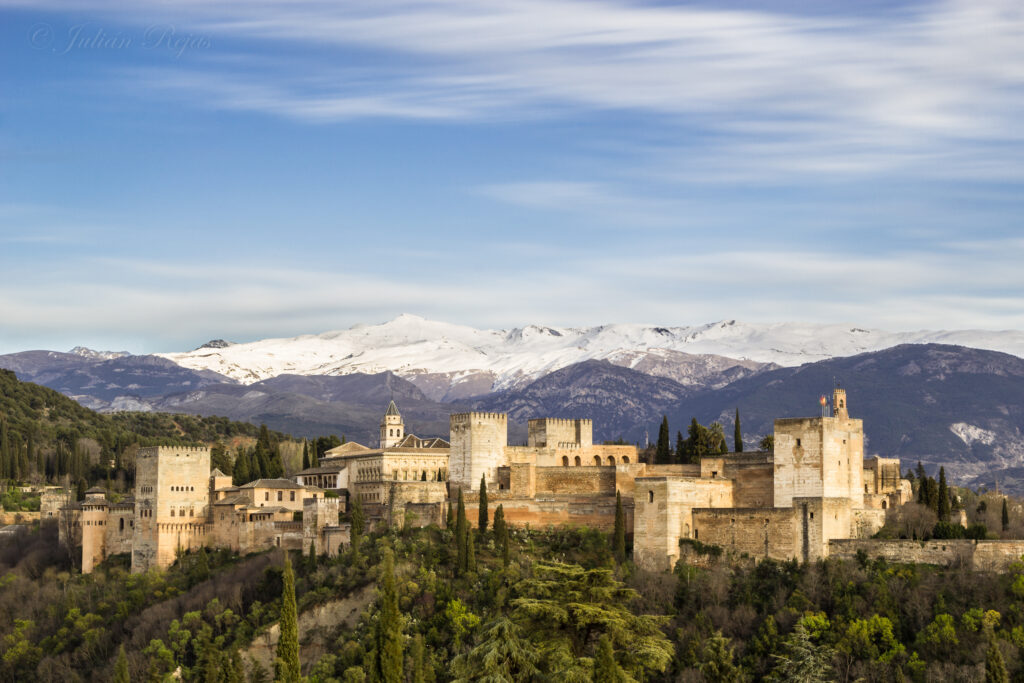
The story of the complex really starts with Muhammad I, the founder of the Nasrid dynasty. He wanted to build a safe place to rule during a time when politics were changing quickly in the Iberian Peninsula. Under his leadership, the Nasrid legacy of Alhambra began to take shape. This was the start of a construction project that would change over time. The castle was named al-Qal’a al-Hamra because of the red clay that surrounded it, but it was the superb craftsmanship within that really made it important. As the last place in Western Europe where Muslims ruled, the site became a safe haven where culture, science, and poetry were carefully kept.
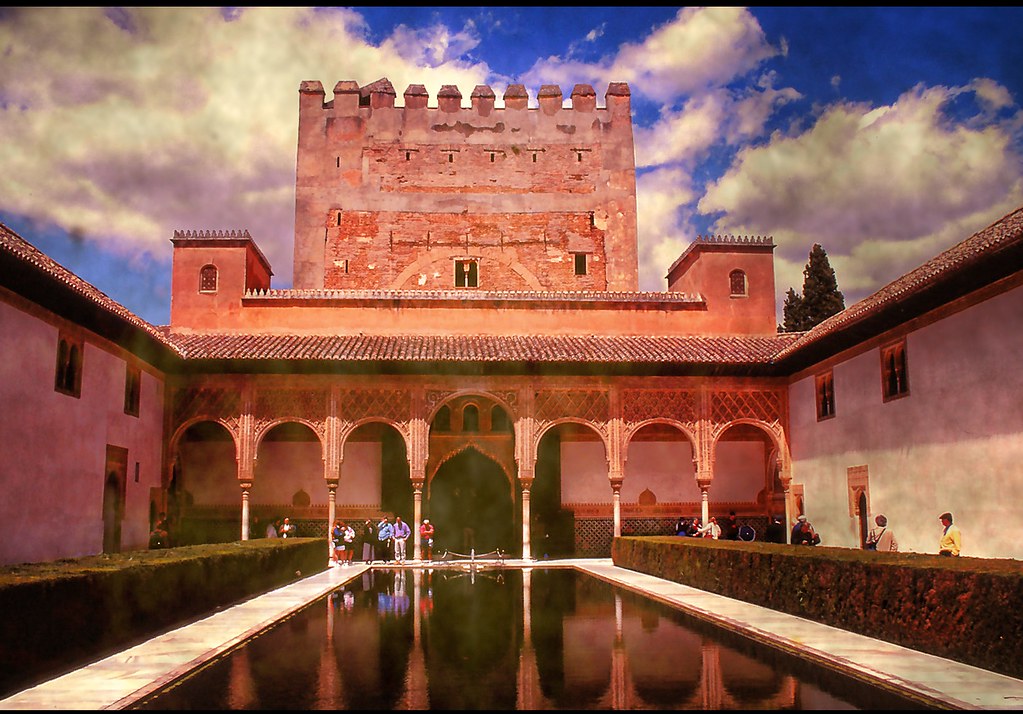
As soon as you step through the door of the Palacios Nazaríes, you can see the precise balance of light and shadow that makes up Alhambra’s Nasrid history. Architects of this time were experts at changing space. They used water as a mirror to make their buildings look twice as impressive. The huge reflecting pool in the Court of the Myrtles is a peaceful core that supports the tall Comares Palace. The Nasrids used geometry and reflection on purpose to show how they saw architecture as an extension of spiritual philosophy, where the physical world was a bridge to a deeper, unseen reality.
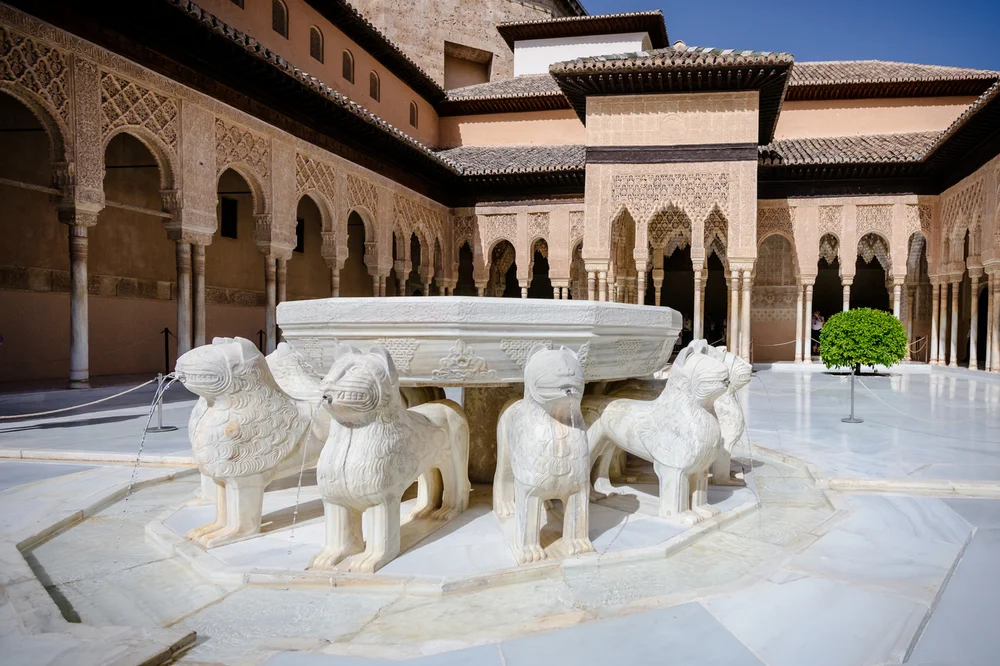
The Court of the Lions may be the best place to see what Alhambra’s Nasrid legacy is all about. This courtyard, which was built for Muhammad V, is the best example of Hispano-Moresque art. Twelve marble lions hold up the central fountain, which is encircled by a forest of thin columns and beautiful arches that look almost weightless even though they are made of stone. The “muqarnas” or honeycomb vaulting in the rooms next door looks like natural stalactites, but it also shows off the skill of the craftsmen of the time. The most obvious place where power and poetry meet is here, where court poets’ lyrics are carved right into the plasterwork of the walls.
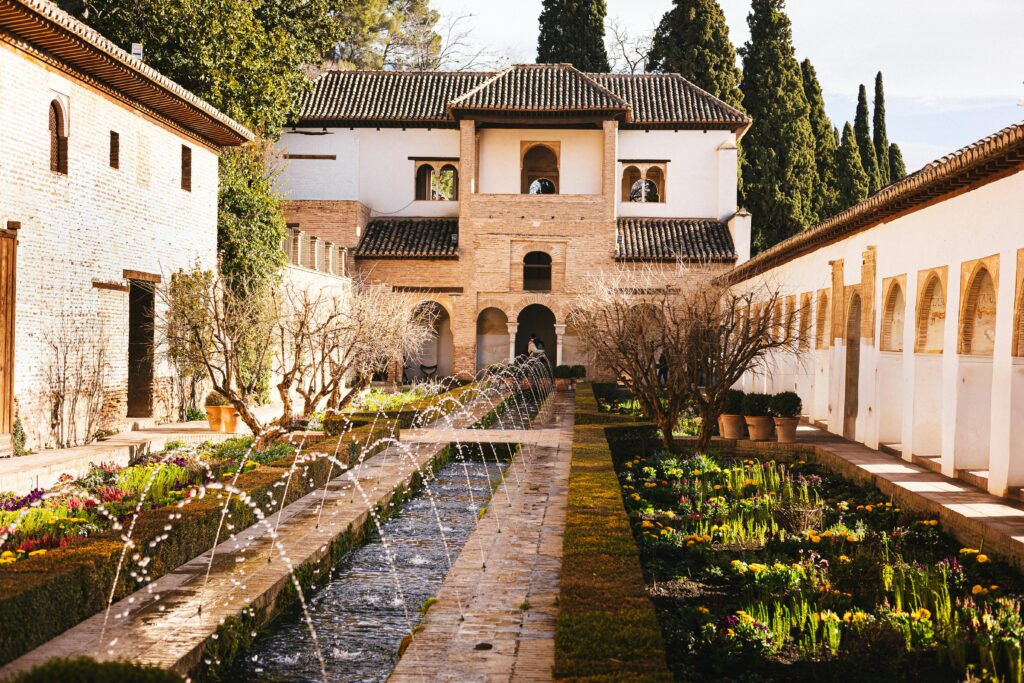
The natural world was a big part of Alhambra’s Nasrid legacy, even though the stone walls and detailed carvings were important. The Generalife, which is the summer palace and gardens just beyond the main fortress walls, was a place for the sultans to relax. The sound of running water is always present here, thanks to a clever system of gravity-fed aqueducts that bring water from the Sierra Nevada mountains. The lengthy pool and crossed jets of water at the Patio de la Acequia show how much the Nasrids loved the “garden of paradise” theme. These gardens weren’t just for looks; they were also useful for farming and cooling off, showing that sustainability was a big part of their city planning.
1492 was a huge turning point in the site’s history, but it didn’t eradicate the Nasrid legacy of Alhambra. When Boabdil, the last Nasrid ruler, gave Ferdinand and Isabella the keys to the city, the Catholic Monarchs were so taken with the palace’s grandeur that they decided to keep it instead of tearing it down. The Palace of Charles V and other later constructions brought Renaissance aspects to the complex, although the original Moorish buildings were still the most important part of the hill. This preservation made it possible for a unique architectural conversation to happen, with Islamic geometry and Christian iconography living side by side and portraying a complicated story of conquering and coexistence.
After the Reconquista, the site went through times of neglect and was even taken over by squatters and Napoleonic troops. But romanticized stories of 19th-century tourists like Washington Irving helped bring Alhambra’s Nasrid past back to the world’s attention. Irving’s “Tales of the Alhambra” told the story of a lost, enchanted country. This book started a huge campaign to restore the kingdom that is still going on today. Modern conservation efforts are now focused on maintaining the delicate stucco and tilework so that future generations can study the “sebka” patterns and the bright “alicatado” mosaics.
Today, the Alhambra is a UNESCO World Heritage site that draws millions of visitors who want to see how the Nasrid legacy has lasted through time. It connects the East and the West and gives us a peek into a time when arithmetic, poetry, and nature were all part of everyday life. The site makes modern visitors slow down and notice the little things, such how the afternoon sun hits the golden plaster or how the smell of jasmine permeates the air at night. It goes beyond regular tourism and taps into the inherent human yearning to make something beautiful that will last forever.
Another important part of Alhambra’s Nasrid heritage that still interests students is the arithmetic that can be discovered in the palaces. Every design and tessellation follows exact rules of geometry, although they give the impression of being exceedingly complicated. This wasn’t an accident; it was a technique to show how the divine is boundless using limited elements. Modern painters and architects get ideas from the way the Nasrids combined complicated math with natural beauty. This intellectual depth makes the stronghold a subject of study that is still important in the 21st century, even though it is no longer in its historical context.
In the end, the stronghold of Granada shows how strong human imagination can be. The empire that built it is long gone, but Alhambra’s Nasrid legacy lives on in the red walls and the still pools. It is a reminder that art can last and bring people together even when things are hard and changing. Whether you’re an architect, a historian, or just a curious visitor, visiting this Andalusian crown treasure is like taking a trip through a stone dream that won’t go away even after seven hundred years.