
There have been many great victories and terrible tragedies in modern India’s history, but the assassination of Mahatma Gandhi may be the most memorable occurrence. On January 30, 1948, the world lost a man who had become a symbol of peace and civil disobedience around the world. Mahatma Gandhi’s death was more than just the death of a 78-year-old statesman; it also threatened to throw a newly formed country into chaos as it dealt with the horrific scars of Partition. To really get how serious this tragedy was, you need to look beyond the gunshots and see how hard it is for a country to figure out who it is when there are religious and societal problems.
Before Mahatma Gandhi was killed, Delhi was tense and full of the smell of smoke from communal rioting. Gandhi was living at Birla House and holding daily prayer groups that helped people who were torn apart by the split between India and Pakistan find their way morally. His strong support for secularism and his recent fast-to-the-death to make sure Pakistan got its fair share of monetary assets made extremist groups angry because they thought his policies were hurting Hindu interests. These growing radical feelings eventually came together to form the sinister plot that culminated to the murder of Mahatma Gandhi, ending a life devoted to Satyagraha in a horrific way.
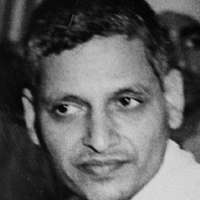
Nathuram Godse, a Hindu nationalist with links to the Hindu Mahasabha, was the main planner of Mahatma Gandhi’s murder. Godse thought that Gandhi’s ideas about nonviolence were making the Hindu community weaker and that his deals with Muslim leaders were to blame for the tragedies of Partition. Godse and his co-conspirators thought that killing Mahatma Gandhi was a “necessary” act to protect the integrity of a Hindu Rashtra. This extreme view turned a guy who preached love into a target for people who thought that a nation needed a more militant and exclusive foundation.
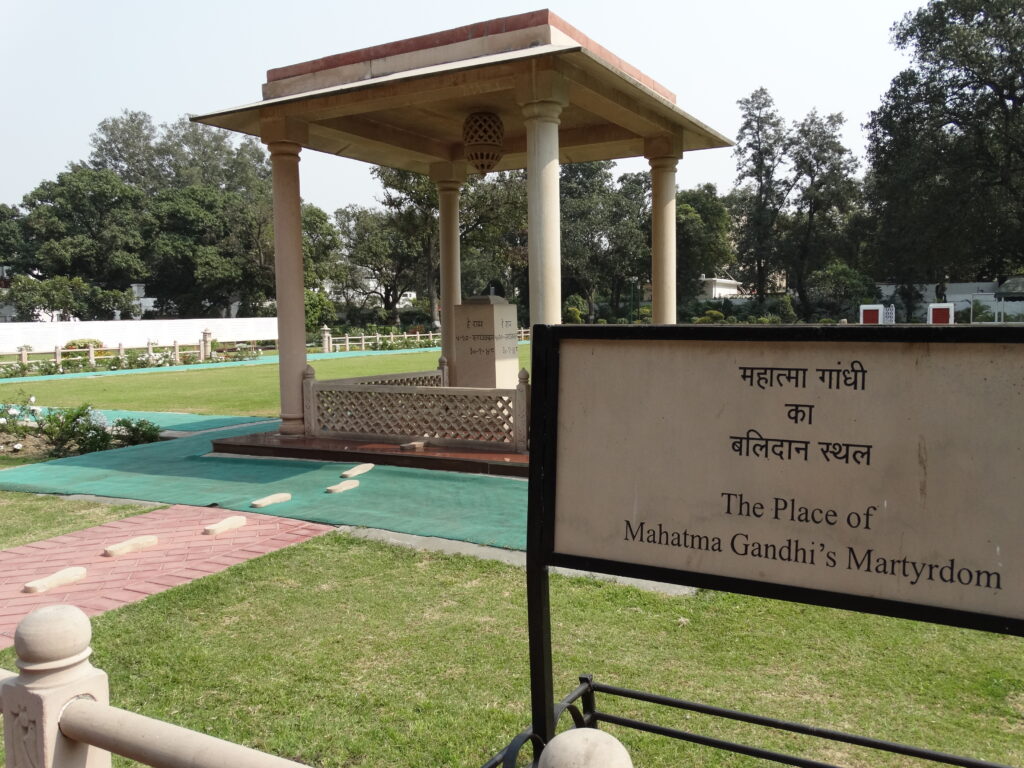
As the sun began to fall on that fateful Friday, people gathered at Birla House without knowing that Mahatma Gandhi would be killed in just a few minutes. Gandhi proceeded to the prayer field for his 5:00 PM gathering with the help of his “grand-niece walking sticks,” Manu and Abha. He was a little late that night since he had to meet with Sardar Vallabhbhai Patel. As he got closer to the stage, the audience moved aside to let him through. It was at this point of weakness that the plan to kill Mahatma Gandhi came to a terrifying end as Godse emerged out of the crowd.
The actual mechanics of Mahatma Gandhi’s assassination were quick and deadly close-range. Before pulling out a Beretta semi-automatic weapon from his clothes, Godse bowed to the Mahatma as a sign of respect that hid his deadly intent. At point-blank range, he shot Gandhi three times in the chest and stomach. It took only a few seconds to kill Mahatma Gandhi. He fell to the ground with the name of God, “Hey Ram,” on his lips. After the gunshots, there was a moment of calm before the garden erupted into a tumultuous mix of anger and sadness.
The news of Mahatma Gandhi’s assassination spread quickly through the streets of Delhi, making the city feel sad after it had just celebrated its freedom. The Prime Minister, Jawaharlal Nehru, rushed to the scene with a face full of shock and sadness. After Mahatma Gandhi was killed, people were afraid that the culprit might be a Muslim. This would have led to a second, even more deadly wave of communal killings across the subcontinent. A fragile but sad peace was kept through the night until it was determined that the killer was a Hindu.
That night, Nehru spoke to the country over the radio. He broke down as he talked of Mahatma Gandhi’s death and famously said, “The light has gone out of our lives.” He told the people of India to honor Gandhi’s legacy by staying calm and unified. He used the tragedy of Gandhi’s killing to bring together the very sectarian differences that the killers had wanted to exacerbate. The state burial that came after was a huge show of national grief. Millions of people lined the streets of Delhi to see the man who had fought an empire with nothing but a staff and a shawl one last time.
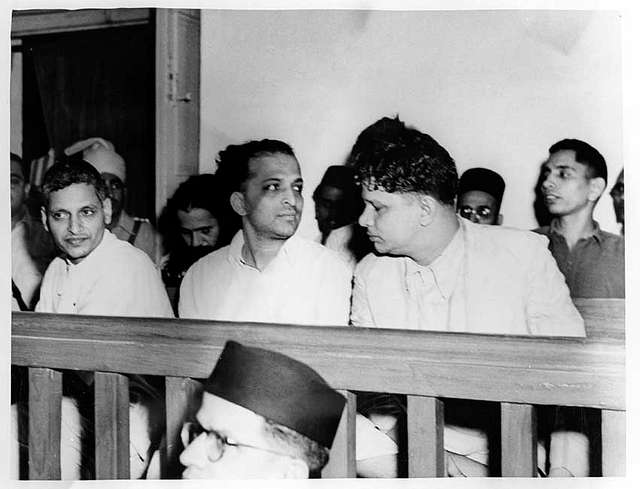
The trial that followed the killing of Mahatma Gandhi showed how deep the conspiracy was and how strongly the killers believed in their cause. Godse utilized his time in court to give a long defense of what he did, but his arguments didn’t change the minds of a country that was grieving for its moral leader. After Godse and his collaborator Narayan Apte were put to death in 1949, the legal proceedings came to an end. However, the killing of Mahatma Gandhi remained a divisive issue for decades. It made India face the truth about how extreme certain people are inside the country and how hard it is to keep a secular democracy in a country with strong religious beliefs.
Even after many years, the murder of Mahatma Gandhi is still a topic of intensive historical research and controversy. Scholars examine the security lapses of that day, interrogating the reasons behind the police’s inadequate protection following a prior assassination attempt on Gandhi about ten days previously. The killing of Mahatma Gandhi had a lasting effect, but it wasn’t because of the “what ifs” about security; it was because of the continuing strength of his ideas. Gandhi died for his belief in a united, multi-faith India. He became a martyr whose influence went beyond his physical life, making sure that his message of Ahimsa would carry on beyond his assassin’s bullets.